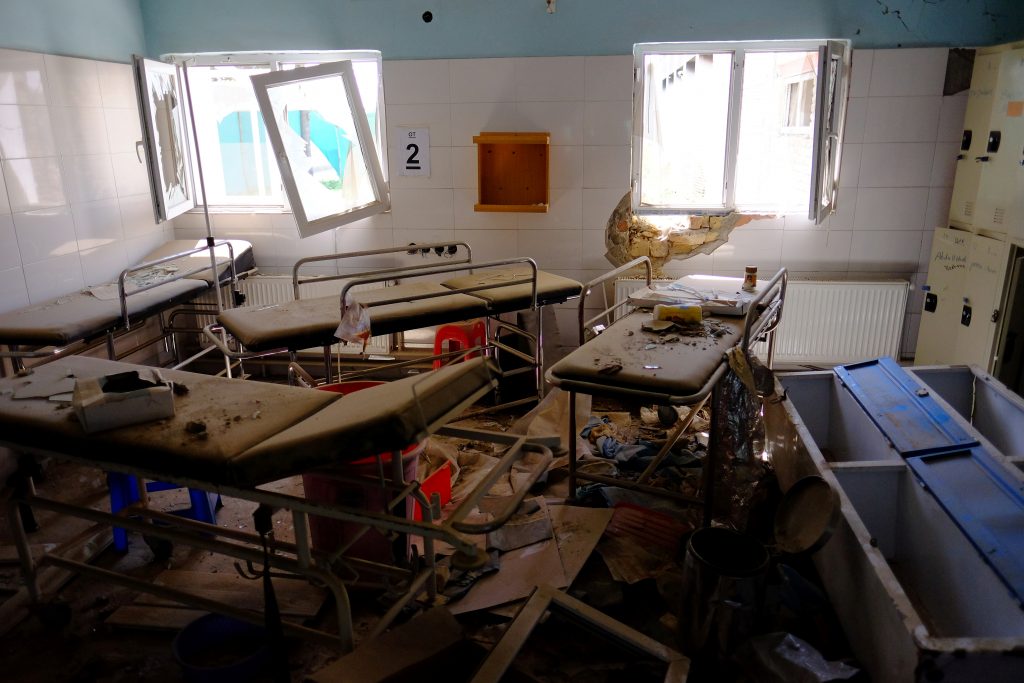
Did Afghan troops manipulate the U.S. into bombing Doctors Without Borders hospital?
HARI SREENIVASAN:
We take a deeper look at the U.S. military's investigation of the attack on the Doctors Without Borders hospital in Kunduz and whether the probe should have gone further with retired Marine Corps Lieutenant Colonel Gary Solis. He served as a company commander in Vietnam and later as a judge advocate and military judge during his 26-year career. He now teaches the law of armed conflict at Georgetown University.
And retired Lieutenant Colonel Jeffrey Addicott spent 20 years as judge advocate in the Army and, for part of that time, served as a senior legal adviser to special forces. He is the director of the Center for Terrorism Law at St. Mary's University School of Law in San Antonio.
Gary Solis, I want to start with you.
The military admits a series of cascading errors that led to this tragedy. What was the most egregious to you?
LT. COL. GARY SOLIS (RET.), Georgetown University: To me, the most egregious was that the pilot was unsure of his target for an hour as he circled overhead, and that he later fired, despite not — apparently not being all that sure of his target.
Even two minutes after he initiated the first volley, he radioed JTAC on the ground asking for confirmation that he had hit the target. He still was unsure that he had hit the correct target, and, to me, that's the most egregious of a series of errors that were made.
ncG1vNJzZmivp6x7sa7SZ6arn1%2Bjsri%2Fx6isq2ejnby4e8Oim2aZlpy1orqMramop6Coeq6tzaKnrqSRqbJuwMeeZK5lo2K2r8DOZpmopZKeu6h5w6iaraeiqHq4tdOhpq6sXZe8s7DEq6pmoJ%2BovarAwKU%3D